
Wherever a structure meets water, the choice of waterproofing system directly determines how long that structure lasts. Applied as a liquid and cured on site, PU waterproofing has become one of the most widely specified solutions because it forms a seamless protective layer and adapts to complex details. This article explains how PU waterproofing differs from other systems, which substrates it suits, how ambient conditions affect application quality, what coat numbers and consumption rates to expect, and what long-term maintenance actually involves.
How PU Waterproofing Differs From Other Systems
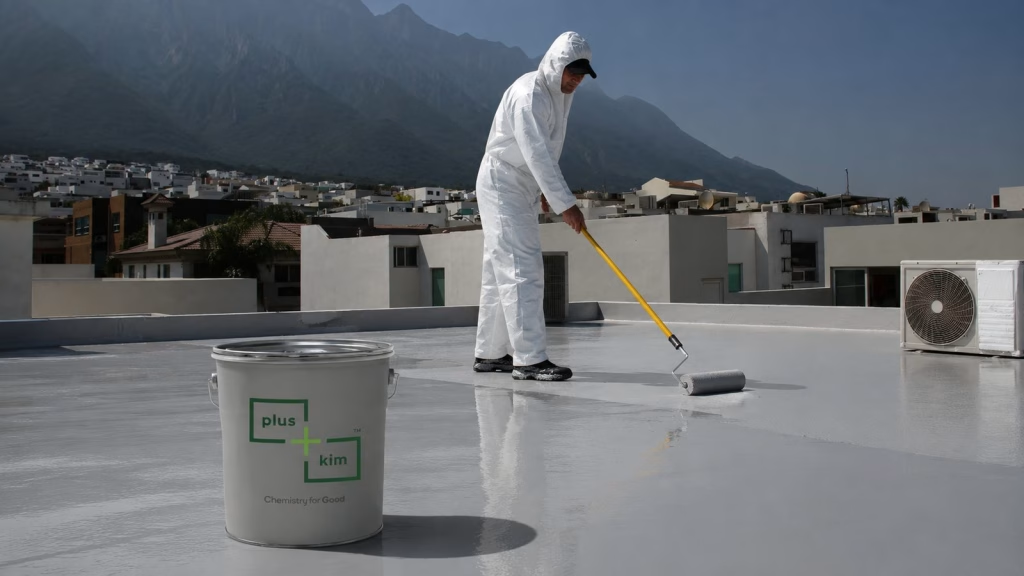
Traditional sheet membranes are produced in a factory and joined together on site. Those joints are the weakest link in the system, and the majority of leaks begin exactly at these details. Polyurethane based liquid systems, by contrast, are applied in liquid form and cure into a single, seamless film.
That structural difference translates into several concrete advantages:
- Seamless protection: No joints at drains, pipe penetrations, corners or parapet upstands,
- Cold application: No open flame or hot bitumen is required, which matters in fire-sensitive buildings and in facilities that stay operational during the works,
- High adhesion: Full contact with the substrate prevents lateral water migration underneath the layer, so a leak source can be traced directly,
- Flexibility: The cured film accommodates thermal movement and micro-cracking in the substrate,
- Detail conformity: Complex geometries are covered without cutting losses or overlaps.
The system also has a limit worth stating plainly: application quality depends heavily on workmanship and site conditions. A factory-made membrane has a fixed thickness, whereas reaching the specified dry film thickness in a liquid system depends on the discipline of the applicator.
Which Substrates Are Suitable?
One of the strongest features of PU liquid systems is that they work across very different substrates. Each substrate, however, brings its own preparation requirements.
Concrete and Screed
This is the most common substrate. Surface pull-off strength should generally be at least 1.5 N/mm², and laitance must be removed mechanically. Freshly poured concrete should not be coated before hydration and shrinkage have largely finished; a minimum of 28 days is the widely accepted rule.
Metal Surfaces
On steel roofs, gutters and machine plinths, rust and oxide layers must be removed first. Correct primer selection is even more critical on metal than on concrete; skipping the primer typically results in blistering within a short service period.
Timber Surfaces
Timber changes dimension as it exchanges moisture with its environment. When working over timber, the elongation capacity of the system and the reinforcement of board joints with tape or fleece become the decisive factors.
Overcoating Existing Systems
Application over an existing bitumen membrane or an aged liquid coating is possible but never automatic. Compatibility should be verified, loose areas cut out, and a suitable tie-coat primer selected. Systems that combine bitumen and polyurethane chemistry, such as Bitumen Modified PU Liquid Membrane, are frequently specified for exactly this type of refurbishment work.
How Humidity and Temperature Affect Application Quality
Most site failures in liquid systems come not from the material but from ignoring ambient conditions.
Substrate moisture is the most critical parameter. Concrete moisture content should generally be below 4% by weight before coating. Excess moisture creates vapour pressure beneath the film and leads to blistering and adhesion loss. Using a moisture meter is far more reliable than visual assessment.
Dew point is the second critical factor. Substrate temperature must be at least 3°C above the ambient dew point. Otherwise an invisible film of condensation forms on the surface and adhesion fails at that interface.
Ambient temperature governs cure speed. In cold conditions the reaction slows and curing takes considerably longer; in hot conditions the surface can skin over quickly, which makes it harder for the layer underneath to cure properly. Application is typically carried out between 5°C and 35°C.
Coat Numbers, Consumption and Curing Times
In liquid waterproofing, performance is governed by one value: the achieved dry film thickness. Reaching it usually follows this sequence:
- Primer coat: Selected according to substrate type, it evens out absorbency and improves adhesion,
- Detail reinforcement: Fleece or tape is embedded at corners, drains and pipe penetrations,
- First coat: Distributed evenly across the surface,
- Second coat: Applied after the specified overcoating interval, preferably at right angles to the first,
- Third coat where required: Added in areas with heavy loading or permanent water contact.
The interval between coats and the full cure time after the final coat are two different things and should not be confused. The surface usually reaches touch-dry within a few hours, but full mechanical and chemical resistance takes days. Water testing or foot traffic should wait until the full cure time stated in the technical data sheet has elapsed.
Consumption varies significantly with surface roughness. Exceeding theoretical consumption on a rough or absorbent substrate is normal, so quantity calculations should include an allowance based on the actual condition of the surface.
Maintenance Requirements and Long-Term Performance
A correctly applied PU waterproofing system is often assumed to be maintenance free, yet periodic inspection extends service life noticeably. An annual visual check should confirm that drains are clear, that no detachment has occurred at detail points, and that the surface has suffered no mechanical damage.
UV exposure deserves separate attention in open areas. Aromatic systems may show colour change and surface chalking over time; where the surface is permanently exposed to sunlight, protecting it with an aliphatic topcoat extends both the appearance and the mechanical life of the system. Products such as 2K Aliphatic PU Top Coat are specified for projects where UV stability is required.
Where localised damage does occur, the main advantage of liquid systems becomes clear: the affected area can be cleaned and recoated with the same material, with no cutting or stripping required.
Conclusion
PU waterproofing is a strong solution for roofs, terraces, balconies, wet rooms and foundations thanks to its seamless film, cold application and superior performance at detail points. Its performance, however, depends heavily on correct substrate preparation, control of ambient conditions and achieving the specified dry film thickness. When substrate type, moisture content and service loading are assessed properly, the result is a protective layer with low maintenance cost over many years. You can review the available options on our 2K PU Based Waterproofing page.
Contact us to identify the PU waterproofing system best suited to your substrate type and service conditions, and to request technical support for your project.