

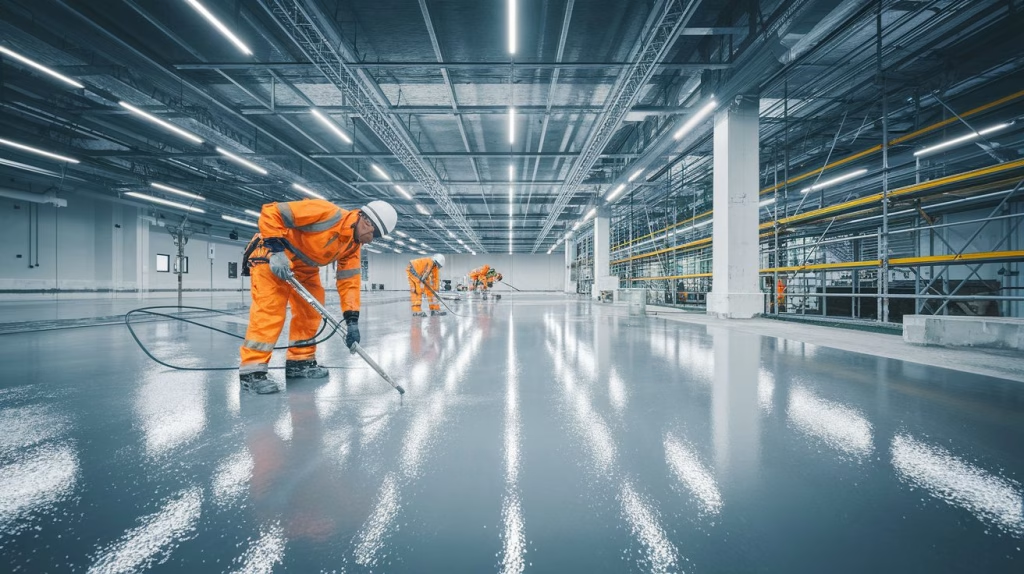
In a facility operating under heavy-duty conditions, floor coating is an entirely different engineering problem from an office or showroom application. When pallet truck traffic, chemical spillage, vibrating machine plinths and temperature fluctuation come together, a standard system is defeated quickly. Industrial epoxy coating systems are designed precisely for these conditions. This article covers how industrial systems differ from standard applications, how they perform under demanding loads, which environments suit them, the surface preparation methods involved, and the criteria that should govern system selection.
How Industrial Systems Differ From Standard Applications
The difference is not only thickness, although thickness is the most visible indicator. A decorative epoxy application typically stays at a few hundred microns, while industrial systems are built up in millimetres. That difference in thickness directly changes the load distribution capacity of the system.
Other factors that define the distinction include:
- Aggregate reinforcement: In industrial mortar systems quartz aggregate forms the skeleton that carries the mechanical load, while the resin acts as the binder,
- Resin selection: Specialised epoxy types such as novolac based grades are introduced according to the chemical loading,
- System integrity: Joints, coving, drainage surrounds and machine plinth details are designed as inseparable parts of the system,
- Repairability: Industrial systems are planned so that localised repair is possible without shutting the whole facility down.
Performance Under Chemical, Mechanical and Vibration Loads
Chemical Resistance
Chemical resistance is never an absolute property; it is always defined together with the substance, its concentration, the temperature and the contact time. A system that withstands a dilute acid at room temperature may be damaged quickly by the same acid when hot and concentrated.
In practice the critical factor is often not the spill itself but how long it stays on the surface. Where chemical loading is heavy, floor falls and drainage planning matter as much as the choice of coating.
Load Bearing
Two different load types must be assessed separately on an industrial floor. Distributed load comes from racking legs and stored goods. Point load concentrates on a very small area beneath a forklift wheel or a machine foot, and this is the genuinely demanding case.
A common assessment error occurs here: the compressive strength of the coating alone is not meaningful. The system is only as strong as the concrete beneath it can carry. Applying a thick coating over weak concrete postpones the problem rather than solving it.
Vibration and Thermal Movement
Around presses, compressors and generators the floor is under continuous vibration. An excessively hard and brittle system will crack in that condition. Here, more flexible polyurethane-modified systems or an elastic intermediate layer are preferred. Similarly, in areas where hot liquids are spilled, thermal shock creates differential expansion between coating and concrete and can lead to debonding.
Suitable Applications
Chemical Plants
Chemical resistance is the priority. Around bunded areas, dosing stations and tank surrounds, carrying the coating up vertical surfaces and maintaining continuity at joint details becomes critical.
Hangars and Maintenance Workshops
Fuel, hydraulic oil and concentrated point loads occur together. High-build, oil-resistant systems are usually specified here, along with a colour scheme that separates working zones on the floor.
Metalworking Workshops
Cutting fluids, swarf and the impact of dropped parts dominate. Impact resistance and ease of cleaning are required together.
Car Parks and Ramps
Here UV exposure and braking forces are decisive. Slip resistance becomes mandatory on ramps, and in open areas epoxy alone is not sufficient and must be protected with an aliphatic topcoat.
Surface Preparation: Shot Blasting, Grinding and Moisture Testing
In industrial systems, surface preparation is the most expensive but most decisive stage of the work.
Grinding aggressively removes old coatings, epoxy residues or oil-contaminated concrete. It is chosen where deep removal is needed and leaves a pronounced texture.
Shot blasting creates a more controlled profile. It opens the surface, removes laitance and leaves a homogeneous texture for the coating to key into. Because closed-circuit machines collect the dust, it is better suited to working inside an operating facility.
Moisture testing is the step that must never be skipped. Moisture within the concrete generates vapour pressure beneath the coating and leads to blistering and debonding. If readings are high there are two options: wait for the concrete to dry, or use a moisture-tolerant primer system. For primer selection, see our 2K Epoxy Primer product page.
After preparation the surface must be completely free of dust and loose particles; industrial vacuum extraction is mandatory at this stage.
Thickness, Colour and Slip Resistance in System Selection
Thickness is determined by service loading. Thin systems suffice for light foot traffic, while production areas with forklift movement require millimetre-scale mortar systems. Over-specifying thickness raises cost; under-specifying it means early replacement.
Colour is not merely an aesthetic choice. Light colours reduce lighting requirements and make spills easier to spot; dark colours conceal soiling. Using colour separation to mark walkways and hazard zones contributes directly to workplace safety.
Slip resistance is necessary in areas worked wet, but it comes at the cost of cleanability. As aggregate particle size increases, slip resistance improves while cleanability decreases. That balance should be set by assessing the wetness of the area and the cleaning method together. System options can be reviewed on our Epoxy Floor Coating Systems page.
Conclusion
When specified according to the real operating conditions of the facility, industrial epoxy coating is a durable and predictable solution. Defining chemical loading in terms of substance and temperature, assessing point loads together with the capacity of the concrete, selecting the correct preparation method, and setting thickness and slip resistance according to actual use are the four decisions that determine system life. Made correctly, they stop the floor from becoming a maintenance item that interrupts production.
Contact us to define together the industrial floor system that matches the chemical and mechanical load profile of your facility.