
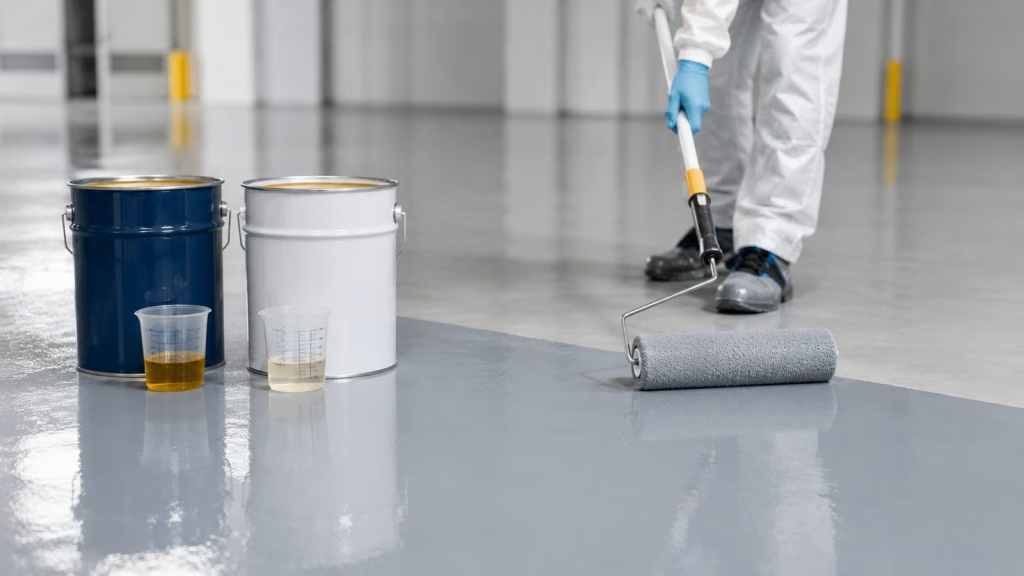
In a floor system the topcoat is the only layer that ever touches the user. The layers beneath carry the mechanical load, but how the surface looks, how easily it cleans and how it ages over the years depend entirely on this final layer. A polyurethane top coat offers clear advantages over epoxy topcoats, particularly where UV exposure and chemical contact are present. This article covers the role of the PU topcoat in the system, the available finishes, its technical properties, the correct application conditions, and the advantages of combining it with epoxy.
The Role of the Topcoat in a Floor System
The topcoat is the protective skin of the system. It shields the body coat beneath from abrasion, chemical attack and UV exposure, while also determining the slip resistance and cleanability of the surface.
This layer performs four main functions:
- Chemical barrier: Prevents spilled substances from reaching the body coat,
- Wearing surface: It is the layer exposed to traffic first and the one that can be renewed over time,
- UV protection: Delays yellowing and physical degradation of the layers beneath,
- Surface definition: Gloss level, colour stability and slip resistance are all set here.
The fact that a topcoat can be renewed is an important advantage in system economics. A worn topcoat can be abraded and reapplied without touching the body coat, which is far cheaper and far quicker than stripping the entire system.
Matt, Semi-Gloss and Gloss Finishes
The choice of gloss level may look like an aesthetic decision, but it produces concrete consequences in daily use.
Gloss finishes reflect light, make a space appear brighter and read as visually cleaner after washing. In return they highlight every scratch, footprint and surface defect. They are typically specified in showrooms and display areas.
Matt finishes conceal scratches and minor irregularities, and reduce glare and therefore eye strain. They keep a well-maintained appearance for longer, which is why they are preferred in production areas and busy circulation routes.
Semi-gloss finishes strike a balance between the two extremes and are the most common choice in practice.
The effect of gloss level on cleaning should not be overlooked either. Very matt surfaces carry more micro-texture and can therefore hold soiling more readily, which is why extremely matt finishes are avoided in food and healthcare facilities.
UV Resistance, Surface Hardness and Chemical Resistance
UV Resistance
This is the most distinct advantage of PU topcoats, but an important distinction applies: the UV resistance of a polyurethane depends on the type of isocyanate used.
Aromatic systems yellow over time under sunlight and show surface chalking. Indoors this causes no practical problem.
Aliphatic systems offer high UV stability and retain colour and gloss for far longer. This is the correct choice for open areas, car park ramps and production halls with significant daylight. 2K Aliphatic PU Top Coat in this category is specified where UV stability is required.
Surface Hardness and Flexibility
Epoxy generally offers higher surface hardness. Polyurethane trades away some of that hardness in exchange for flexibility. This looks like a disadvantage at first, but in practice becomes a significant benefit: a flexible topcoat absorbs impact energy and tolerates micro-movement in the layer beneath. Around vibrating equipment and in areas with pronounced thermal movement, this reduces the risk of cracking.
Chemical Resistance
Chemical resistance comparisons do not run in one direction. Epoxy performs strongly against many acids, while polyurethane behaves better against solvents, oils and hot water washdown. This is why PU based topcoats are preferred in the washdown zones of food processing facilities.
Mixing Ratio, Temperature and Curing Conditions
Two-component polyurethane systems demand more application discipline than epoxy.
The mixing ratio must be applied by weight and in full. In a polyurethane reaction, ratio deviation damages not just strength but curing itself; a shortfall of hardener produces permanent tackiness. Splitting a pack should never be attempted without accurate scales.
Moisture sensitivity is the most critical difference in polyurethane. Isocyanate reacts with moisture in the air and on the substrate, releasing carbon dioxide that appears as foaming, pinholing or patchy dulling. The surface must therefore be dry, and application should be avoided in high humidity.
Temperature governs both pot life and drying time. The general application range is 10°C to 30°C, and substrate temperature must be kept at least 3°C above the dew point.
Curing is assessed in three stages: touch dry, open to foot traffic, and full chemical cure. Foot traffic is usually possible within a day, while full chemical resistance takes several days. Chemical contact or wet cleaning should not begin before full cure is complete.
Combining an Epoxy Body Coat With a PU Topcoat
In industrial floor systems the most common and best balanced solution is to use both resin families according to their strengths:
- Epoxy primer: Penetrates the concrete, consolidates the surface and equalises absorbency,
- Epoxy body coat: Provides system thickness and compressive strength, with aggregate reinforcement added here,
- Polyurethane topcoat: Delivers UV stability, flexibility, chemical barrier and surface appearance.
The advantage of this build-up is that each layer does what it does best. The high mechanical strength of epoxy is combined with the UV stability and flexibility of polyurethane in a single system. During refurbishment, the system can also be refreshed by replacing the topcoat alone.
The only point requiring attention in this combination is interlayer compatibility and the overcoating window. Where PU is to be applied directly over fully cured epoxy, the surface must be opened by mechanical abrasion. For the complete system, see our Epoxy Floor Coating Systems page.
Conclusion
A polyurethane top coat is both the visible face and the protective skin of a floor system. Correctly distinguishing aliphatic from aromatic grades, setting the gloss level according to real use and cleaning practice, following mixing ratio and moisture conditions with discipline, and combining the topcoat correctly with an epoxy body coat together determine the visual and mechanical life of the system. In a well-specified system, the topcoat can be renewed on its own without replacing the whole floor, which noticeably reduces long-term maintenance cost.
Contact our technical team to select the topcoat suited to the lighting, chemical and traffic conditions of your floor.